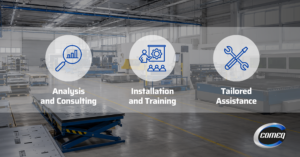
Buying a machine takes a day. Running it well takes more time. We’re there for both.
There’s a moment every fabricator knows. The new machine arrives, the crate comes off, and the salesperson who was so responsive last month suddenly isn’t picking up. The relationship, it turns out, ended at the invoice.
That’s not how we work. Comeq has spent more than fifty years importing the best metal fabricating machinery in the world into North America and in that time we’ve learned that the machine itself is only part of what a customer actually buys. The rest is everything that happens around it.
Here’s what that looks like in practice.
Before the sale: getting the specification right
Our job starts well before a contract is signed.
No two operations are alike. Two shops can run the same parts on paper and still need completely different equipment — different volumes, different material mix, different floor space, different people running it. Recommending a machine without understanding all of that isn’t a recommendation. It’s a guess.
So we ask questions first. What is your type of production? What’s the material range you actually run, not just the one you quote on? Only then do we point to a machine.
That’s also why we represent a diverse range of specialized brands rather than a single line. Each one is a leader in its own category, which means we can put forward the right machine for the job instead of the only machine we happen to sell.
If the honest answer is a smaller machine than you were expecting, we’ll say so.
And you don’t have to take our word for how it runs. Our showroom is open year-round, so you can watch the machine work before you commit to it.
During: installation and training
A machine that’s installed but not understood is an expensive piece of floor space.
We handle the installation of your new equipment, and we stay for the part that matters more: making sure your team can actually use it. Full operator training comes as part of the process, not as a line item you discover later. That extends past day one
After: support that answers
This is where most relationships quietly end. It’s where ours is designed to hold.
You’ll speak to a technician, not a call center. When you call Comeq with a technical problem, the person on the other end is a trained technician who knows the machine you’re describing. No script, no ticket queue, no explaining your press brake to someone reading from a manual.
Parts are on the shelf. We keep popular models and accessories in stock, along with an extensive inventory of replacement parts across every line we carry, including machines we sold years ago. Owners of older equipment are often surprised by this. They shouldn’t be. Supporting a machine for its full working life is the whole point.